When introducing new approaches in agriculture, the most valuable insights often come from farmers who have already tested them in practice.
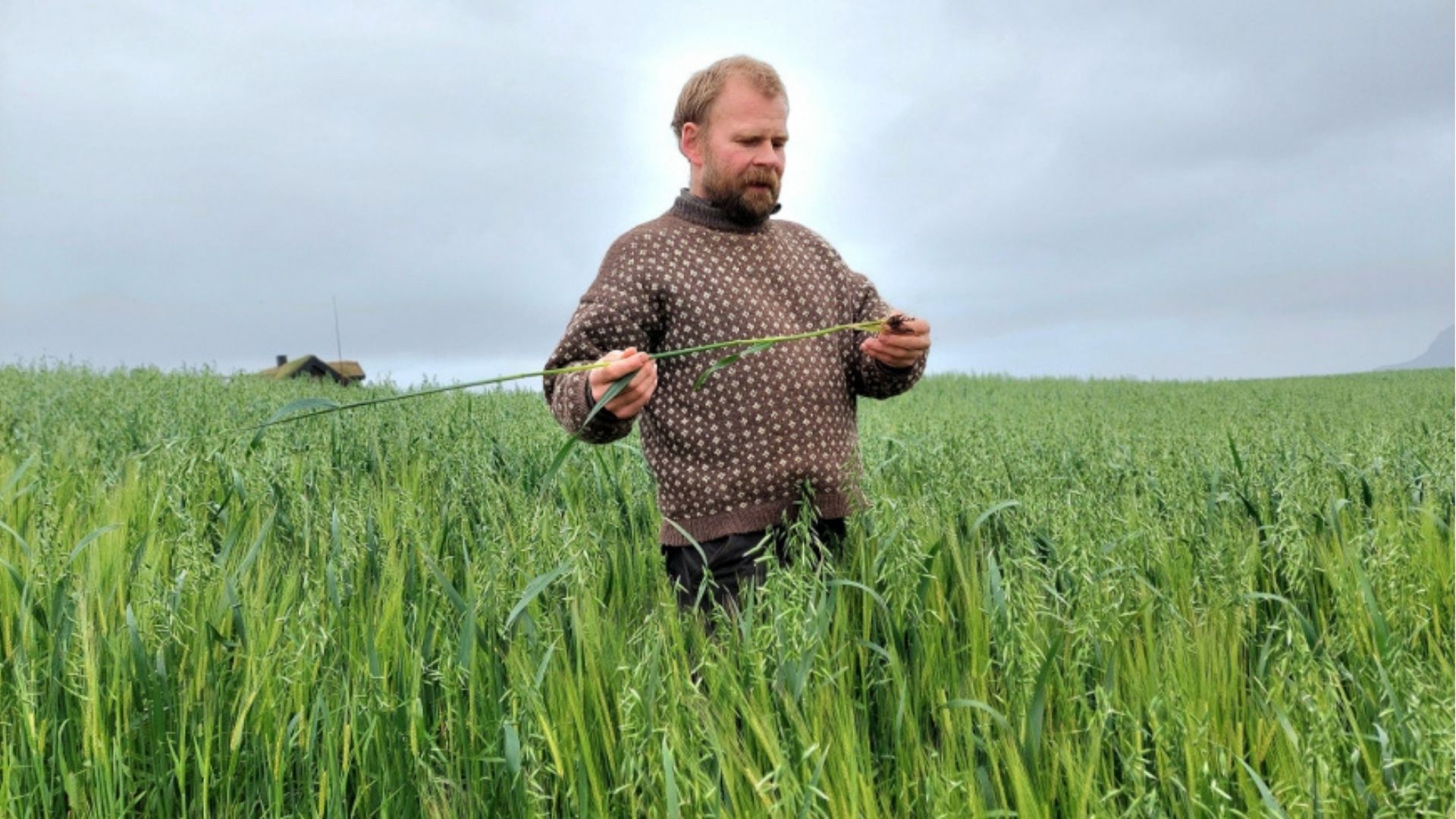
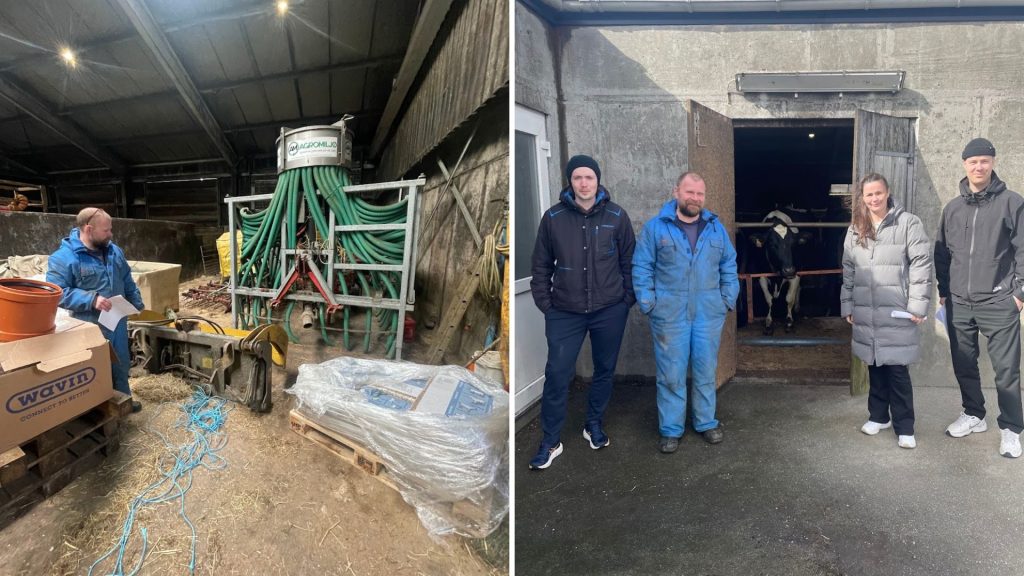
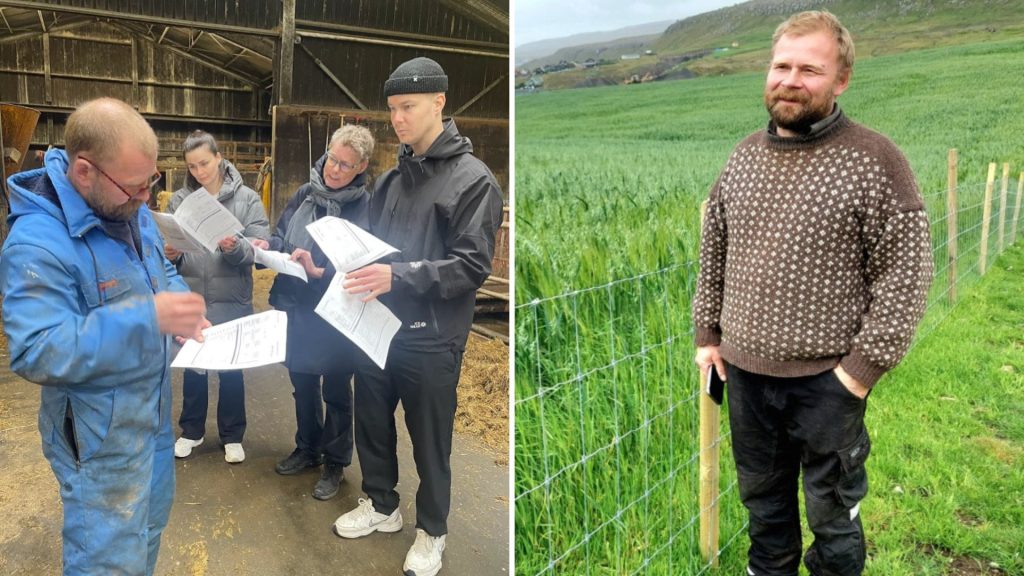
During a recent visit to the Faroe Islands, the Terraforming LIFE project team met with and interviewed Sigert Patursson, a dairy farmer at Vatnaskarðar. Sigert has worked in farming his entire life and has held leading roles within Faroese agriculture, including serving as chairman of the farmers’ association for over a decade.
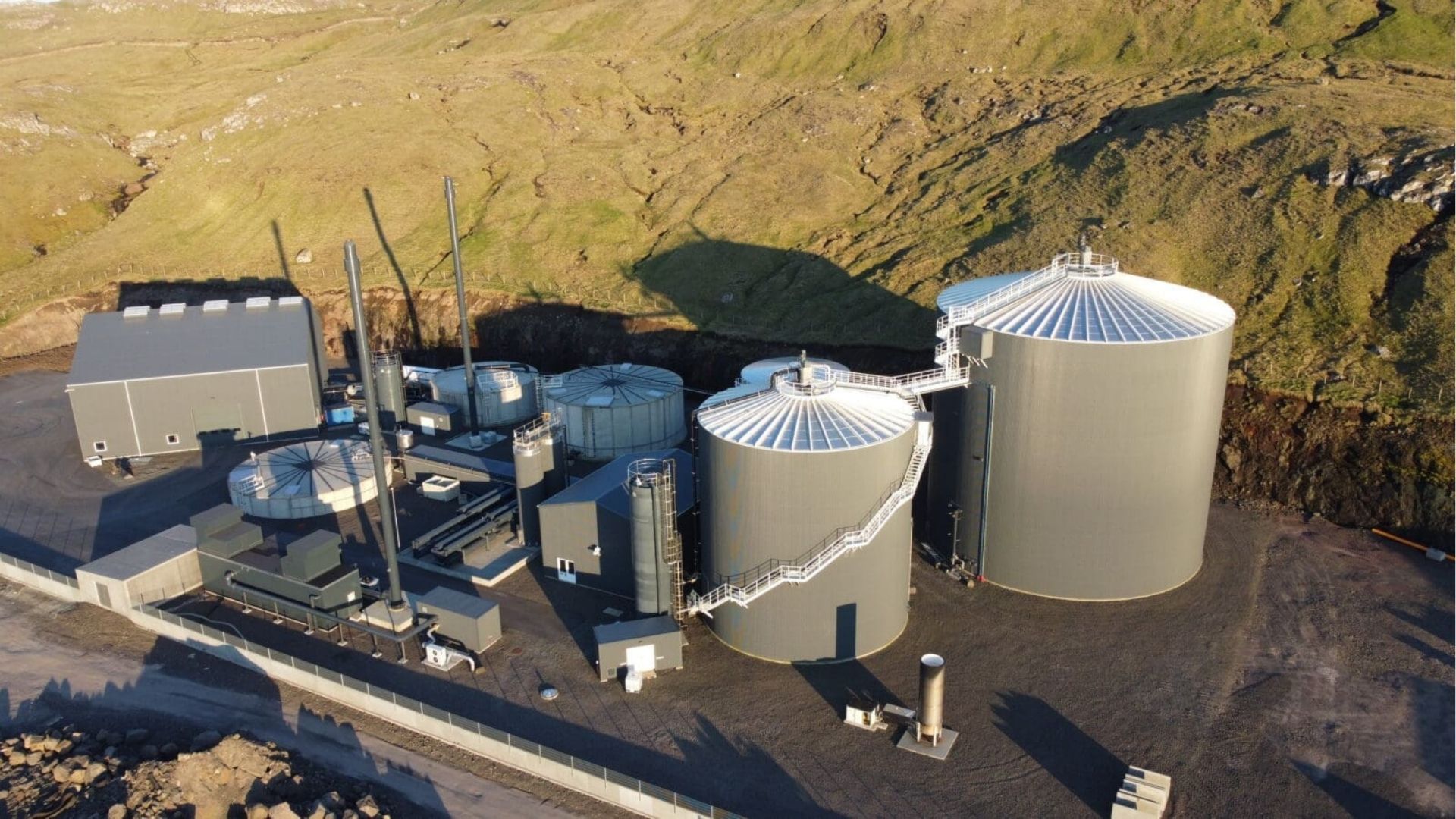
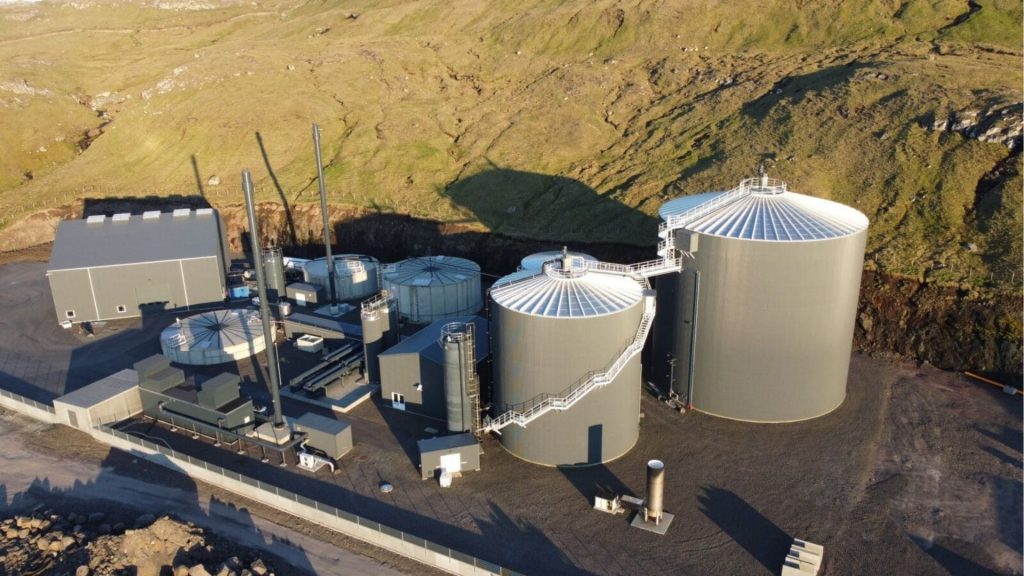
Sigert has been using fertiliser from the biogas plant FÖRKA since it began operating in 2020. The plant processes organic side streams from fish farming and cow manure from agriculture into energy and fertiliser.
Based on Sigert’s experience, the use of fertiliser from FÖRKA has reduced his reliance on synthetic fertiliser, with costs reduced by around 40 percent. No changes to existing farm equipment have been required. At the same time, he highlights practical benefits such as easier handling, reduced odour and less weeds in the field.
While there are differences between FÖRKA and the approach being developed within Terraforming LIFE, the Faroese experience nevertheless provides valuable insights and replication potential for Icelandic farmers.
Could you introduce your farm and describe the type of production you run?
“I took over this farm in 2000, although I had already started working here in 1999. I took it over from my uncle. I grew up on a farm in Kirkjubøur, where we had dairy cattle and sheep, so I have worked with cattle all my life.
Today here at Vatnaskarðar, we have around 70 milking cows, and with calves and heifers the total is about 140 animals. We also keep around 270 sheep. Our milk production is approximately 650 tonnes a year, and we also slaughter older cows, around 20 to 30 annually.
Alongside farming, I have been involved in agricultural leadership for many years. I have served on the board of the farmers’ association since 2000 and have been chairman for the last 13 years. I have also been on the board of the dairy company MBM since 2011 and became chairman in 2024.”
How long have you been using the fertiliser produced by FÖRKA?
“Since day one. FÖRKA started in 2020, and I have used the fertiliser from the beginning.
The idea actually goes back much further. There had been discussions for years about building a biogas plant, but it is a major investment and it seemed difficult to move forward. At the same time, the salmon industry had a problem with side streams and dead fish and was spending a lot of money exporting that material out of the country.
To me, that never made sense, because this material contains valuable nutrients that can be used in agriculture and biogas production. When the salmon industry saw the potential in that, it created the basis for investment. The collaboration made sense because the manure from farms helps keep the plant running, the fish material improves the fertiliser, the salmon industry solves a problem, and society benefits through electricity, heat and environmental gains such as lower greenhouse gas emissions. In that sense, everybody wins.“
What are the main benefits for you as a farmer using the fertiliser from FÖRKA?
“One of the main benefits is that it is more homogenised than untreated manure. The dry matter is lower and the mineral content is higher, which makes it easier to work with.
Another important benefit is that most weed seeds are broken down during the biogas process. That makes a real difference in practice.
There is also a clear difference in smell. If it were not for the fish, the smell would probably be even less, but even as it is now, it is much less persistent than ordinary cow manure.
For me, there is also value in being part of a system that makes full use of resources and focuses on circular, systemic solutions. I can say to people that the cow manure is heating their houses and charging their phone. That is a good story, and it matters.“
What differences have you seen in crop growth or yield since switching to this fertiliser?
“Actually, there is not a big difference in the amount of grass we produce. The main difference is that we get the same amount of grass with less chemical fertiliser.
We mostly produce grass for the animals, and from that perspective the results have been very positive.”
Can you describe how the process works in practice, from manure collection to receiving fertiliser back?
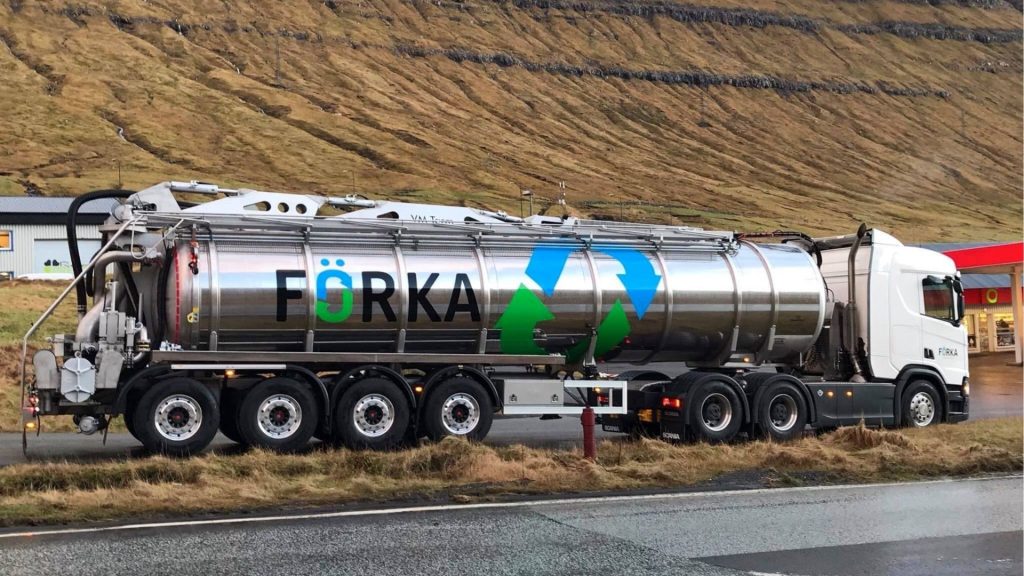
“FÖRKA handles all the transport. They come to the farm with full tanks of fertiliser, empty those into the storage tanks, then go to the cowshed, load fresh manure and take it back to the biogas plant.
There is no payment involved in that exchange. I deliver one truckload and I get one truckload back.
This makes the process simple from a farmer’s perspective.“
Have you had to invest in any additional equipment to use the fertiliser from FÖRKA?
“No. I use the same equipment as before.
That is one of the advantages. There has been no need for additional investment or major changes in the way we work.”
Is there any difference in odour compared to ordinary cow manure?
“Yes, definitely.
When you are working with the fertiliser from the biogas plant, the smell is a bit like peeling eggs, or like the sulphur smell you sometimes get from hot water in Iceland. You notice it during application.
But the important difference is that the smell disappears very quickly. With regular cow manure, the smell can remain for around 14 days. With the fertiliser from FÖRKA, it is usually gone the next day.
That is a big advantage, especially in more populated areas.”
Why do you use the fertiliser from FÖRKA?
“The main reason at the beginning was actually the smell, because I am farming close to a fairly populated area. That mattered a lot.
But there are other benefits too. The biogas process kills most of the weeds, which is a real advantage. When the fertiliser comes back to me, the dry matter is lower, so it is more homogenised and easier to handle. It is easier to pump, easier to spread, and it works well in daily farming.
Because it is thinner, there is also less organic material left sitting on the plants after spreading. If you are using hoses, it gets down better between the plants and to the roots. After two or three days, you can already see the effect.
And beyond the practical side, I think it is a good system because it makes use of resources that would otherwise be wasted or exported.”
How many farmers in the Faroe Islands are using fertiliser from FÖRKA?
“Almost all of them.
There are a few exceptions, particularly on Sandoy, where participation has been more difficult because of transport and storage conditions. Some farms have manure storage integrated under the cowshed and would need separate storage capacity in order to keep the fresh manure and returned fertiliser apart.
But overall, most farmers are participating.”
How has it affected your use of synthetic fertiliser?
“We still use synthetic fertiliser, but I have already reduced my use by at least 40%, and I think I will probably reduce it even more.
Based on the samples we have seen, only potassium levels are going slightly down, while nitrogen and phosphorus are increasing. If everything were fully utilised, it might only be necessary to add potassium. But we still do not know exactly how much nitrogen is lost to the air during spreading, so farmers are understandably cautious about removing synthetic fertiliser completely.
Even so, the reduction we have already seen is significant.”
Are there any limitations or points to consider when using the fertiliser?
“Yes, there are some things to pay attention to.
The main one is nitrogen. If the nitrogen level is too high and too much is applied, it can damage the plants or burn them. If that happens, it can take two or three weeks before regrowth starts again.
We still need to understand that better. More knowledge is needed about how the nutrients behave and how best to manage application rates.
Another point is that because the fertiliser is thinner, application needs to be adapted to local conditions. On sloped land, for example, very liquid material may not go into the soil as well as thicker manure.
So it works well, but management matters.”
You mentioned nutrient quality. What do you see as the value of organic fertiliser compared to synthetic fertiliser?
“The good thing about manure is that it contains all the minerals the soil needs.
With chemical fertiliser, you typically only get a limited number of nutrients, so you need manure anyway. In this case, you get better manure back.
If you look back in history, farmers used seaweed and fish leftovers in the fields. Those materials were a valued resource because they brought strength to the soil and to the plants. In that sense, this is not a completely new idea. It is about putting good resources back into the land.”
What would you say to an Icelandic farmer who is unsure whether to use a fertiliser similar to the one produced at FÖRKA?
“I would say there is no reason to be worried.
From my point of view, it works in practice. If you have enough land, you could reduce synthetic fertiliser a great deal and rely more on organic fertiliser like this.
The fish element is important, though. If you only digest cow manure, you basically get cow manure back. The fish adds value in this case, especially through their nutrient content. It may not need to be a very high proportion, but it clearly makes a difference.
So my message would be to look at the practical results. That is what matters.“
What would you say to communities who worry about having a plant like FÖRKA nearby?
“It should not be a problem.
It is not a problem here. They have systems to filter the air leaving the building, so if people are worried about odour, there are technical solutions to deal with that.
From what we have seen, it works well.
If you could summarise your experience with this fertiliser in one message to other farmers, what would it be?
“Mostly, everything gets easier.“
We would like to thank Sigert Patursson for welcoming us to his farm and for sharing his experience and insights. His practical knowledge provides valuable perspective not only for the Terraforming LIFE project team and all the stakeholders involved but also for the circular economy in general.